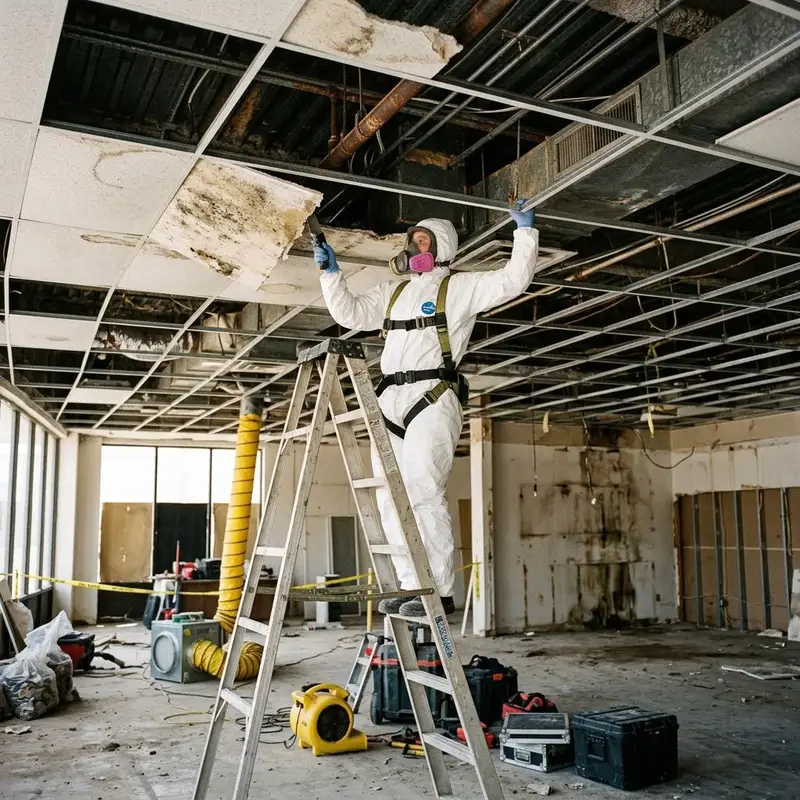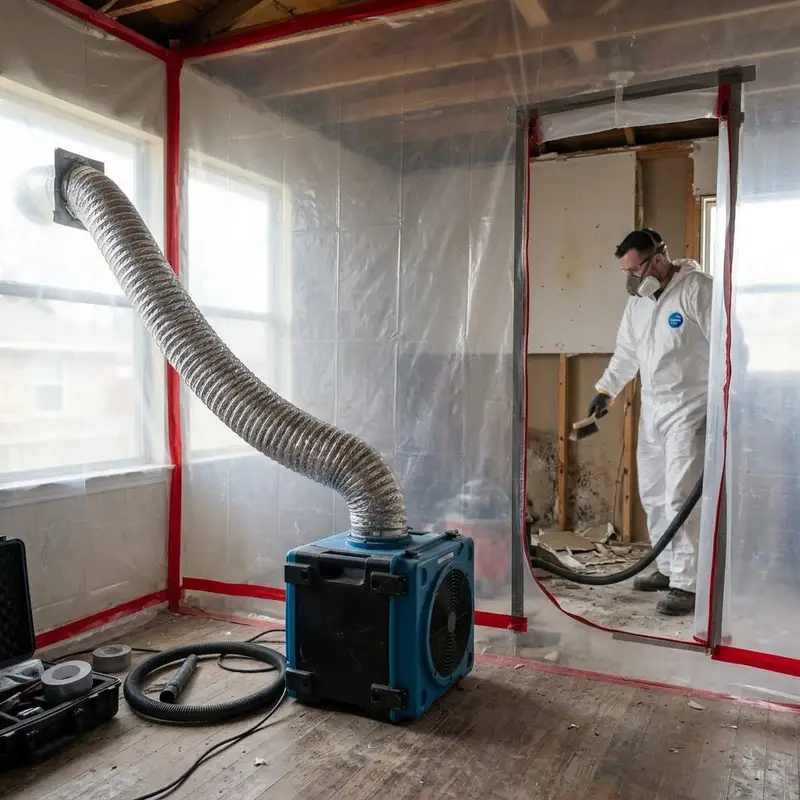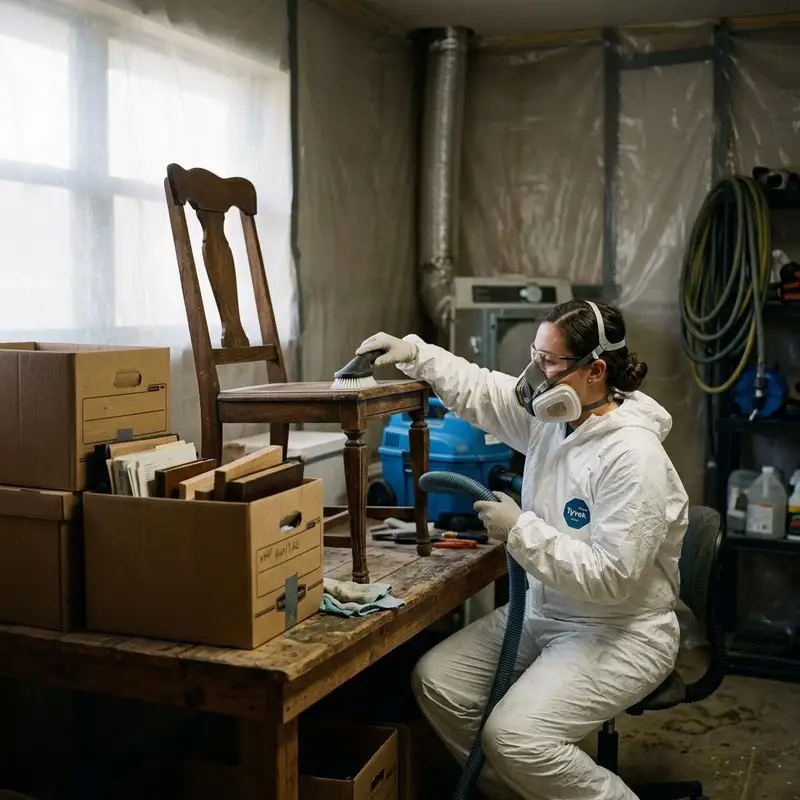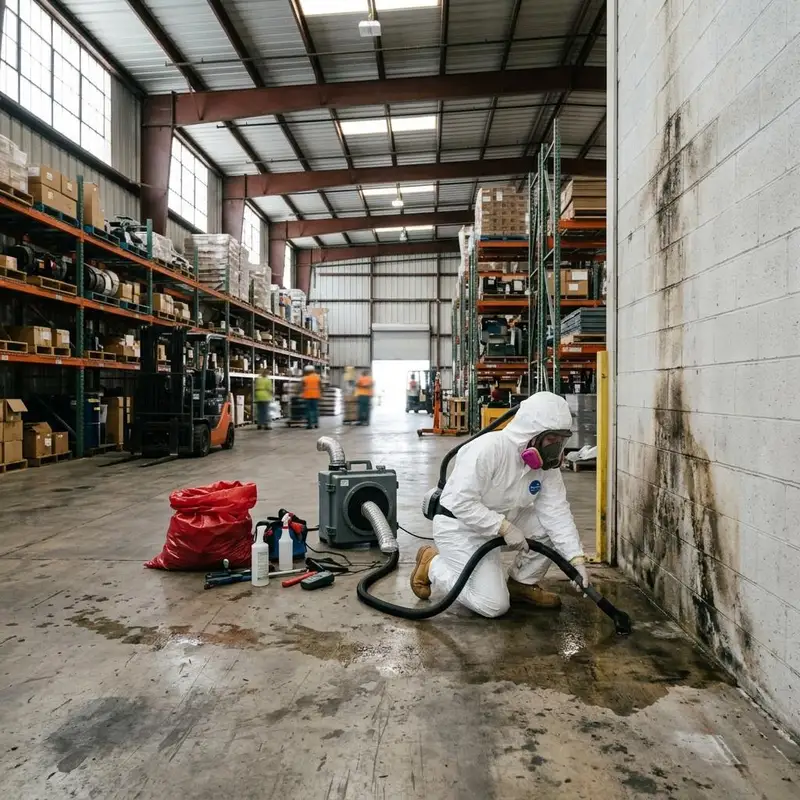
Warehouses are big, open and often lightly conditioned, which changes how mold behaves and how cleanup works. Warehouse mold removal focuses on affected zones, stored inventory and the building envelope without shutting down the entire operation.
The Problem Behind Warehouse Mold Removal
Roof leaks, dock door gaps and condensation on metal surfaces bring in water. Pallets, cardboard and stored paper goods become food sources. Because the space is so large, growth can spread across inventory before anyone connects it to a leak overhead.
Signs You May Need Warehouse Mold Removal
- Staining on walls below roof seams
- Spotting on cardboard, pallets or stored goods
- Condensation on metal walls or roof decking
- Musty odor near dock doors
What the Work Includes
- Zone containment within larger open spaces
- Removal and disposal of damaged materials
- HEPA cleaning of racking, walls and structure
- Roof and envelope leak identification
Our Warehouse Mold Removal Process
- STEP 1
Define zones
We separate affected areas from active operations.
- STEP 2
Handle inventory
Affected goods are identified for cleaning or disposal decisions.
- STEP 3
Clean structure
Racking, walls and floors are cleaned with industrial grade HEPA equipment.
- STEP 4
Flag the envelope
Roof and wall leak points are documented for repair.
A Fort Worth Consideration
Fort Worth is a major logistics area with many metal warehouses. Condensation on metal roof decks during humid stretches is a recurring local issue.
Warehouse Mold Removal Near You
We provide warehouse mold removal for property owners in Downtown Fort Worth, Forest Hill, Edgecliff Village, Westover Hills, River Oaks, Sansom Park and White Settlement. If you are searching for help nearby, call to describe your situation or email photos to [email protected]. We answer Monday to Saturday, 8am to 7pm.